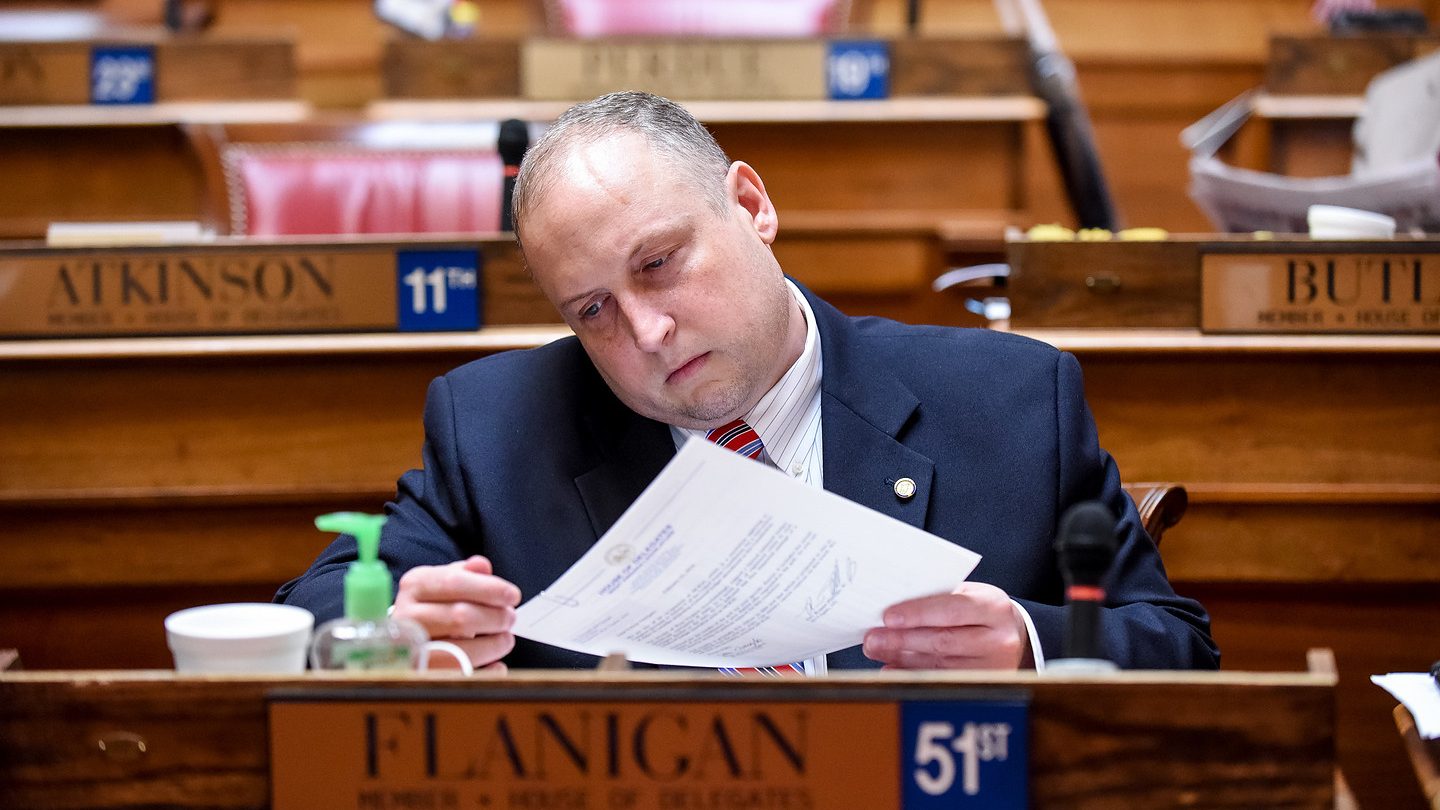
CHARLESTON — Legislation introduced by Del. Bill Flanigan (R-Ohio, 4) would impose sweeping regulations on artificial intelligence-generated, satirical memes, and digitally altered images, a proposal legal experts say is unconstitutional and modeled after a California law already struck down by a federal court.
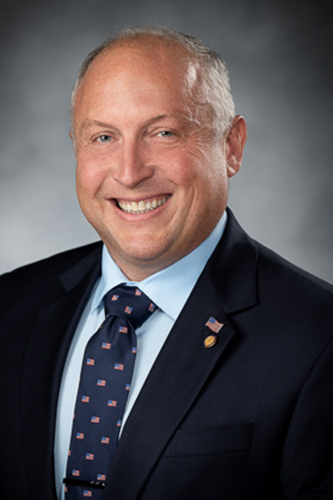
Flanigan
House Bill 4496, sponsored by Del. Flanigan, would require individuals, media creators and online platforms to disclose when images, audio or video have been generated or “materially altered” using artificial intelligence. The bill defines “materially altered” broadly as any change that affects meaning, appearance, speech, identity or context beyond basic correction or enhancement.
Critics argue the bill violates the First Amendment’s compelled speech doctrine by forcing speakers to include government-mandated disclaimers or risk penalties. Under the bill, failure to properly label AI-generated or altered content could result in civil fines of up to $100,000 per day for organizations and $1,000 per day for individuals, with additional penalties for content deemed politically deceptive.
The West Virginia bill directly conflicts with the U.S. Supreme Court’s ruling in Miami Herald Publishing Co. v. Tornillo (1974), which held that the government may not compel a private speaker or publisher to carry state-mandated speech or interfere with editorial judgment. In Tornillo, the Court rejected a law requiring newspapers to publish responses, finding that even disclosure-style mandates impermissibly burden free expression.
Similarly, West Virginia’s H.B. 4496 forces individuals and online platforms to attach government-prescribed labels, watermarks and audio disclosures to images and media as a condition of speaking. By dictating how content must be presented, and exposing speakers to severe penalties if the state deems the disclosure insufficient. The bill effectively coerces removal of speech and intrudes on editorial discretion, a form of compelled speech the Supreme Court has made clear is unconstitutional.
In Kohls v. Bonta, a federal court struck down similar California legislation, ruling that government regulation of photoshopped or AI-generated images violated the First Amendment. The court found that even when a law merely requires a disclaimer, enforcement ultimately compels the removal of speech if the government determines the disclosure is insufficient, an outcome the court said effectively eliminates protected expression.
West Virginia’s H.B. 4496 mirrors that same California law. The bill authorizes the state to require the identification, labeling and, in practice, removal of noncompliant content, giving regulators broad discretion over what speech may remain online. Legal analysts warn that such authority amounts to government control over content moderation decisions traditionally made by private platforms and content creators.
The bill also places new obligations on websites and social media platforms, requiring them to preserve disclosures, prevent removal of labels and implement automated systems to detect unlabeled AI-generated content. Critics say that level of oversight grants the state nearly unfettered discretion to supervise online speech, chilling lawful expression.
Under longstanding First Amendment precedent, states may not compel private platforms to adopt government-mandated content moderation policies or enforce state-preferred speech rules. Courts have consistently held that online platforms are protected in deciding what speech to host or remove.
The bill unconstitutionally regulates satire, parody and commentary that rely on altered images. Publications such as The Babylon Bee and The Onion, which frequently use manipulated or AI-assisted images for satire, would fall within the bill’s scope. Attorneys from Alliance Defending Freedom represented The Babylon Bee in a challenge to California’s AB 2839 and AB 2655, laws similar in structure to the West Virginia proposal.
Critics argue that by regulating satire and parody, HB 4496 interferes with protected speech and undermines the ability of users to engage in political discourse, voter education and democratic participation online.
The bill also conflicts with President Donald Trump’s Executive Order 14365, which directs the U.S. Department of Commerce to identify “onerous” state AI laws and refer them to a federal AI Litigation Task Force. That task force is charged with challenging state laws that raise concerns related to interstate commerce, federal preemption and First Amendment protections.
Legal observers warn that if enacted, HB 4496 will expose West Virginia to federal litigation, similar to challenges brought against other states. They argue the bill’s vague definitions, broad enforcement powers and severe penalties would likely fail constitutional scrutiny while discouraging lawful speech across digital platforms.
The bill has been referred to the House Committee on the Judiciary for further consideration.