


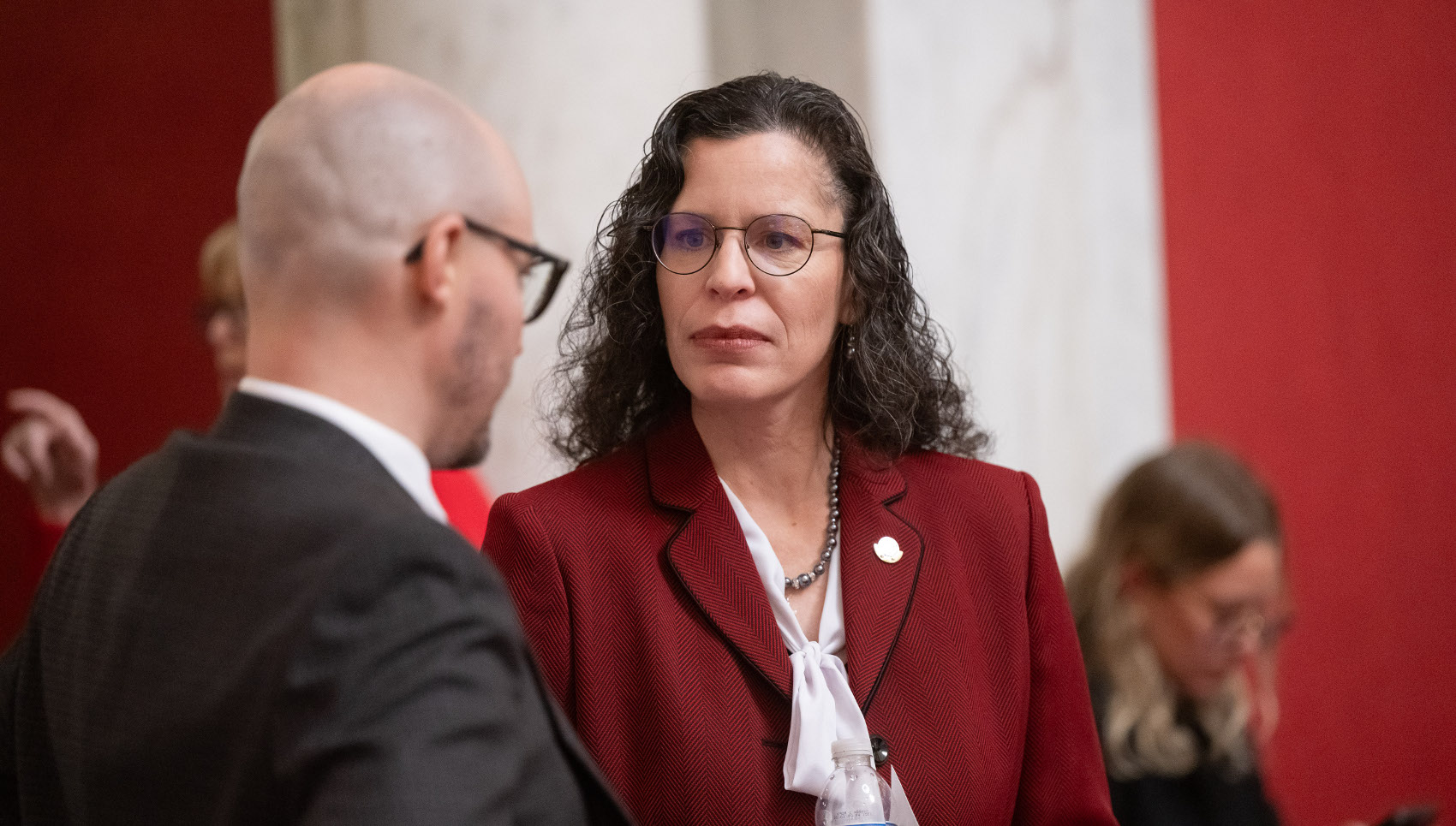
CHARLESTON — Sen. Patricia Rucker (R-Jefferson, 16) has introduced legislation that would recognize gold and silver as legal tender in the state and establish a framework for their use in private and public transactions.
Sen. Rucker introduced Senate Bill 413 (2026) titled the Transactional Gold and Silver Act, would allow gold and silver specie to be used for payment of debts, taxes, fees and other obligations, provided parties mutually agree to their use.
The bill cites Article I, Section 10 of the U.S. Constitution, which permits states to recognize gold and silver as legal tender. It states that allowing the use of precious metals can help citizens hedge against inflation, preserve wealth and promote economic stability and individual liberty.
Under the proposal, gold and silver would not replace existing currency, and no individual or business would be required to accept them as payment. Instead, the bill establishes an optional system for using gold and silver either physically or through electronic transactions fully backed by stored bullion.
The legislation directs the State Treasurer’s Office to designate or establish one or more bullion depositories for the secure storage of gold and silver. The treasurer would also be authorized to approve electronic payment systems that allow account holders to make transactions using precious metals held in those depositories.
The bill includes detailed definitions for bullion, specie, electronic payment systems and depository agents, and requires that all stored metals be fully insured for their replacement value. Deposits would remain the sole property of the account holder and could not be appropriated without due process.
S.B. 413 also contains provisions aimed at consumer privacy protection. It prohibits the use of transactional gold and silver systems for surveillance, social credit scoring, behavioral conditioning or other forms of social or economic control. Transaction data would generally be shielded from disclosure without proper court authorization.
The measure explicitly states that it does not authorize the use of central bank digital currency and distinguishes transactional gold and silver from government-issued digital money.
If enacted, the State Treasurer’s Office would be required to implement the program by July 1, 2027, and submit annual reports to the Legislature detailing operations, usage and economic impact.
The bill also exempts exchanges of gold and silver from taxation, stating that converting one form of legal tender into another would not trigger tax liability.
S.B. 413 has been referred to the Committee on Banking and Insurance and then to the Committee on Finance for further consideration.